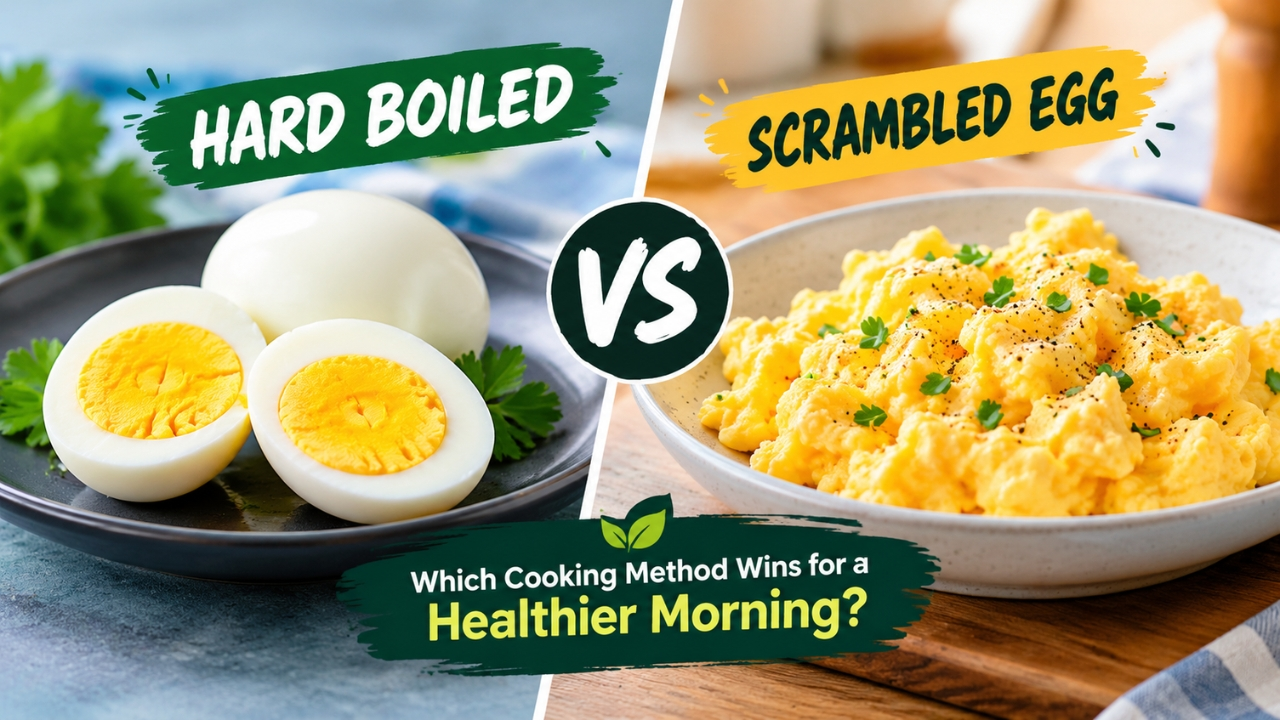
Eggs are one of the most reliable breakfast foods: affordable, filling and packed with high-quality protein. But when the pan is heating or the pot is boiling, a common question comes up: hard boiled vs. scrambled egg, which is actually healthier? The short answer is that the egg itself is the same. What changes is what happens to it during cooking and what you add along the way. Here is a practical breakdown, so you can pick the version that suits your health goals and your mornings.
Hard Boiled vs. Scrambled Egg: The Nutrition Basics
A plain egg contains about the same protein, vitamins and minerals however you cook it. Both versions deliver choline, vitamin B12, selenium and vitamin D, mostly from the yolk. The real difference is the added ingredients. Hard boiling needs only water and heat, while scrambling usually involves butter, oil, milk or cream, which adds fat and calories. A typical large egg has about 70 to 80 calories, and a scrambled one made with a little butter often lands slightly higher.
Side-by-Side Comparison
The figures below are approximate for one large egg and vary with portion size and the fat used.
| Factor | Hard Boiled Egg | Scrambled Egg (with butter/milk) |
|---|---|---|
| Calories | About 78 | About 90 to 100 |
| Protein | About 6 g | About 6 g |
| Total fat | About 5 g | About 6 to 7 g |
| Added ingredients | None | Butter, oil or milk |
| Prep time | 10 to 12 minutes (batchable) | 3 to 5 minutes |
| Portability | Excellent | Poor |
| Best for | Calorie control, meal prep | Quick hot breakfasts, flavour variety |
Which One Is Better for Weight Management?
If you are watching calories, hard boiled eggs have a small edge simply because nothing extra goes into them. They are also easy to portion: one egg is one egg. Scrambled eggs can be just as light if you cook them in a non-stick pan with a small amount of oil, or add vegetables to bulk up the plate without adding much fat. In practice, the healthier choice often depends on how much butter or cream you add, not on the cooking method itself.
Digestibility, Cholesterol and Heart Health
Cooking makes egg protein easier for the body to absorb than raw egg, so both versions do well here. On cholesterol, current guidance suggests that for most healthy people, moderate egg intake fits into a balanced diet. Saturated fat from butter, bacon or sausage served alongside eggs usually matters more for heart health than the egg. If you have high cholesterol, diabetes or heart disease, ask your doctor or a registered dietitian how many eggs suit you each week.
How to Choose the Right Egg for Your Routine
Pick based on your lifestyle rather than chasing a “winner.”
- Choose hard boiled if you want grab-and-go protein, tight calorie control or an easy lunchbox snack.
- Choose scrambled if you prefer a warm, soft breakfast or want to add spinach, tomatoes, onions or peppers.
- Keep it light by using a teaspoon of olive oil instead of heavy butter, and cook on medium-low heat for a softer texture.
- Store smart: keep boiled eggs refrigerated and eat them within about a week, and eat cooked scrambled eggs within a few days.
Frequently Asked Questions
Are hard boiled eggs healthier than scrambled eggs?
Slightly, in terms of calories and fat, because they need no added ingredients. Nutritionally, the two are very close.
Which has more protein, a boiled or a scrambled egg?
They have about the same protein per egg. Any difference comes from portion size, not the cooking method.
Can I eat eggs every day?
For most healthy adults, one egg a day fits a balanced diet. People with certain medical conditions should check with their healthcare provider.
What is the healthiest way to scramble eggs?
Use a non-stick pan, a small amount of olive oil, and add vegetables. Skip cream and cook gently so the eggs stay soft.
Brown Eggs vs. White Eggs: Which Is Better and Healthier? What Shell Color Really Tells You