
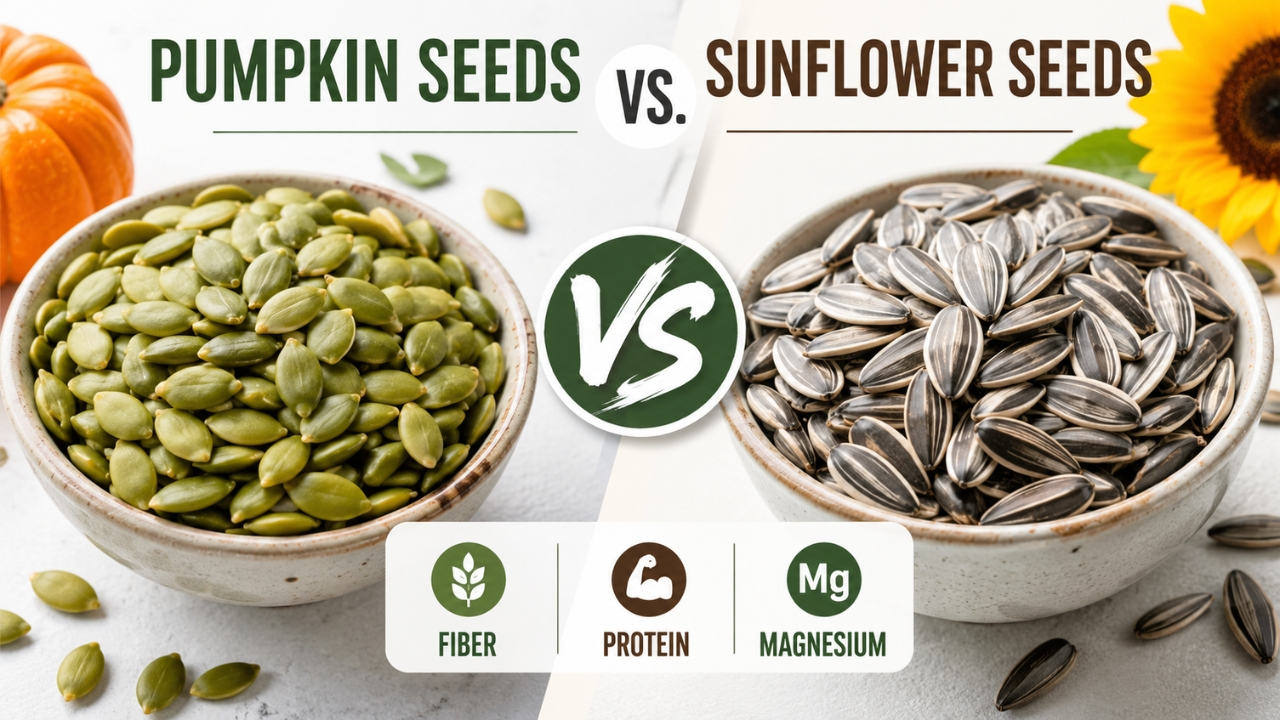
If you keep a jar of seeds on your kitchen counter, you have probably stood there wondering which one deserves the spot. The pumpkin seeds vs. sunflower seeds debate comes up often because both are crunchy and affordable, and both are full of unsaturated fats. The real question is which one fits your goals better. The honest answer is that it depends on what you want from your fats, your minerals, and your calories.
Pumpkin Seeds vs. Sunflower Seeds: A Quick Nutrition Snapshot
Per ounce (about 28 g, or a small handful), the two seeds look surprisingly alike. Each delivers roughly 160 calories and 13 to 14 grams of fat, most of it unsaturated. The differences show up in the details: the type of fat, the protein, the fiber, and the micronutrients.
| Nutrient (per 1 oz / 28 g, approx.) | Pumpkin Seeds (Pepitas) | Sunflower Seeds (Kernels) |
|---|---|---|
| Calories | ~150–160 | ~160–165 |
| Total fat | ~13–14 g | ~14 g |
| Saturated fat | ~2.5 g | ~1.5 g |
| Monounsaturated fat | ~4.5 g | ~3–5 g |
| Polyunsaturated fat | ~6 g | ~6–9 g |
| Protein | ~8–9 g | ~5.5–6 g |
| Fiber | ~1.7 g | ~2–3 g |
| Standout nutrients | Magnesium, zinc, iron | Vitamin E, selenium, B vitamins |
Values are approximate and vary by brand, roasting method, and whether the seeds are raw or salted. Check the label on your own pack.
Which Seed Has the Healthier Fat Profile?
Both seeds get most of their fat from unsaturated sources, the kind linked to better heart health when they replace saturated fats in your diet. Sunflower seeds have a slight edge here because they are lower in saturated fat and higher in polyunsaturated fat. Pumpkin seeds carry a bit more saturated fat, but they still land firmly in the “healthy fat” category, and they provide a small amount of the plant omega-3 called ALA.
One point is easy to overlook. Both seeds are much richer in omega-6 than omega-3 fats. That is not a reason to avoid them, but if seeds are your main fat source, pair them with omega-3 foods such as walnuts, flaxseed, chia, or fatty fish to keep your intake balanced.
Beyond Fats: Minerals, Vitamins, and Protein
Fat is only part of the picture. Pumpkin seeds lead on protein and are among the better food sources of magnesium and zinc. Magnesium supports muscle and nerve function, and zinc plays a role in immunity. Sunflower seeds stand out for vitamin E, an antioxidant that protects cells, along with selenium and several B vitamins. Their slightly higher fiber can help you feel full for longer.
In practice, the choice often comes down to what your usual diet lacks:
- Choose pumpkin seeds if you want more protein, magnesium, and zinc, or if you prefer a lower-saturated-fat count per calorie of protein.
- Choose sunflower seeds if you want more vitamin E and selenium, or a milder, softer crunch for salads and sandwiches.
- Choose both if you like variety, which is usually the smartest approach.
How to Add Them to Your Diet
A single ounce a day is a sensible portion, because seeds are energy-dense and the calories add up quickly. A few simple habits make the most of them:
- Sprinkle a tablespoon over oatmeal, yogurt, or a smoothie bowl.
- Toss them into salads, stir-fries, or grain bowls for crunch.
- Blend sunflower seeds into a dip or use sunflower seed butter if you avoid nuts.
- Pick unsalted or lightly salted versions. Shell-on sunflower seeds sold as snacks can carry a lot of sodium.
- Store them in an airtight container in a cool place, or in the fridge, because their natural oils can turn rancid.
Which Is Better for Healthy Fats?
For healthy fats alone, sunflower seeds have a small advantage thanks to lower saturated fat and more vitamin E. Pumpkin seeds counter with more protein, magnesium, and zinc. Neither is a bad choice, and the gap between them is smaller than most headlines suggest. Rotating the two gives you a wider range of nutrients, and the portion you eat matters more than which seed you pick. Anyone with a seed allergy, or who manages a medical condition through diet, should check with a doctor or registered dietitian first.
FAQs
1. Are pumpkin seeds or sunflower seeds better for heart health?
Both support heart health when they replace saturated or processed fats. Sunflower seeds have slightly less saturated fat, while pumpkin seeds add magnesium, which supports healthy blood pressure.
2. Which seed has more protein?
Pumpkin seeds. An ounce provides roughly 8 to 9 grams, compared with about 5 to 6 grams in sunflower seeds.
3. Can I eat both seeds every day?
Yes, as long as you stay near one ounce total. Both are calorie-dense, so a small handful is enough.
4. Are raw or roasted seeds healthier?
Both are fine. Dry-roasted, unsalted seeds are a good option. Avoid heavily salted or flavored varieties, which add sodium and sometimes sugar.
1 thought on “Pumpkin Seeds vs. Sunflower Seeds: Which Is Better for Protein, Fiber, and Magnesium”